Why Personal Branding Matters More Than a Degree in 2026
Best Graphic Designer
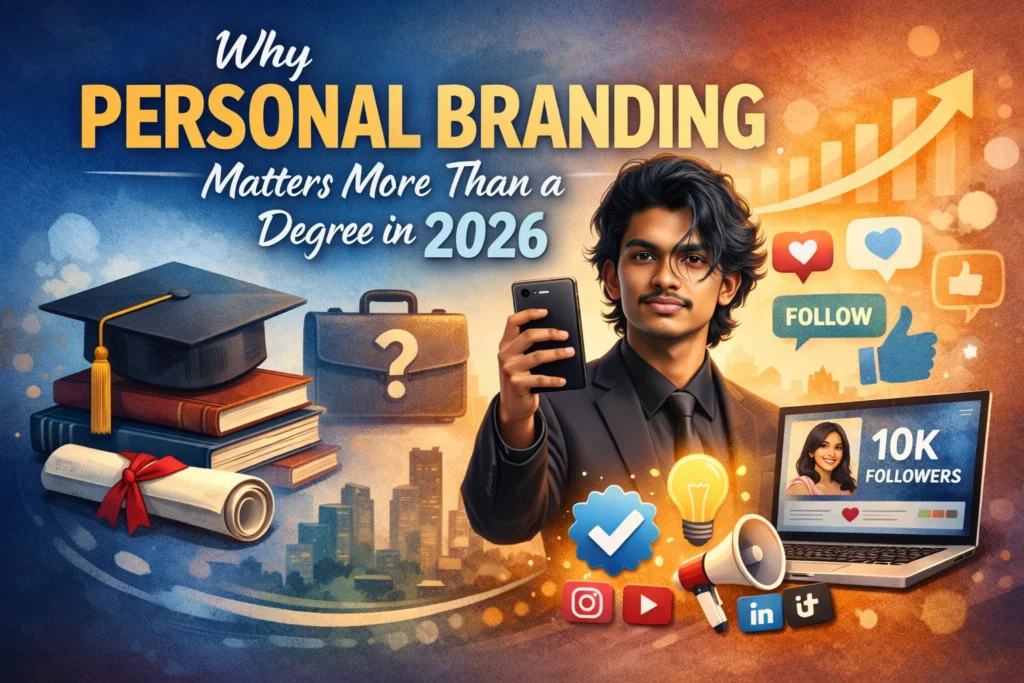
A few years back the road to professional success seemed straightforward: Hit the books hard. Earn a university credential. Assemble a polished résumé. Send out applications. That route still has merit, but by 2026 it’s no longer sufficient on its own. Today, opportunities aren’t handed to the most academically qualified candidate. They go to the individual who is recognizable, trustworthy, and top-of-mind. That’s where personal branding makes all the difference.
Before anyone hires you, partners with you, or even answers an email, they’ll Google you. They’ll scroll through your LinkedIn profile, glance at your Instagram feed, and gauge the tone of your posts. These platforms have silently morphed into living résumés. Unlike a static list of courses and grades, they reveal how you think, how you communicate, and how reliably you show up.
A degree tells a story about what you learned in the past. Your personal brand tells a story about what you can do right now. In a market where thousands hold the same diploma, only a handful possess a distinct voice, a visible online presence, and a clear point of view. That rarity becomes a powerful lever.
When you regularly publish your ideas, industry observations, lessons from experiments, and even your missteps, a pattern emerges. People start linking your name with a specific area of expertise. Recognition breeds trust, and trust opens doors.
Claims alone no longer impress. Evidence does. “I’m good at marketing.” → weak. A public breakdown of a campaign strategy → strong. “I understand branding.” → generic. An analysis of why a brand succeeds → memorable. Sharing your process turns your content into a dynamic portfolio. Instead of waiting for a chance, you demonstrate why you deserve one. This is especially crucial for freelancers, creators, and early-career professionals who can build authority from a home office—provided they stay consistent.
Talent is abundant; attention is scarce. Countless skilled individuals exist, but without visibility their abilities remain hidden, and hidden talent can’t generate income or influence. Personal branding amplifies your skill set.
Picture two equally talented digital marketers: One works in silence, never posting insights. The other publishes weekly trend analyses, explains strategies, and engages with peers. Who will attract more projects? Who will be the first person a company thinks of when they need help? The answer is obvious—the one who shows up publicly.
Formal education provides structure, discipline, and foundational knowledge. Yet in 2026, education alone doesn’t guarantee exposure. Visibility must be created, and you can do it yourself.
You don’t need to be a master before you start speaking. You only need to be a step ahead of the majority and willing to share what you’re learning. Audiences care more about progress than perfection. Documenting your journey—new skills, experiments, lessons—makes you relatable, and relatability fuels loyalty.
When you cultivate even a modest, niche following, you become less reliant on traditional hiring channels. You can promote services directly to your community. Test ideas in real time. Initiate conversations with decision-makers. You essentially create your own distribution network.
Many companies now recruit based on visibility and demonstrated thinking, not just academic records. They want people who can articulate ideas clearly, think strategically, and represent the brand online. Your content serves as that proof.
Sharing knowledge forces you to clarify it. Engaging in public dialogue refines your perspective. Maintaining a regular posting schedule builds discipline. In other words, personal branding is public personal development.
Over time, every article, video, or tweet adds to a digital archive that showcases consistency, clarity, and evolution. Five years from now, that archive tells a rich story about who you are and how you think—something a static diploma cannot convey.
If you’re waiting until you “know enough” to start posting, you’re postponing your own growth. Aim to be a little better than yesterday and to be useful to someone today. Share a takeaway from a recent course. Offer your take on an emerging trend. Break down a market observation you made. Your goal isn’t virality; it’s value.
In 2026 the stand-out professionals aren’t just the most skilled—they’re the most visible, the most authentic, and the most consistent communicators. A degree may open the door. A personal brand lets you walk right in—and own the room. The best part? You can begin building that brand right now.